


10000℃! This is a temperature higher than the surface of the sun, the temperature at which a nuclear bomb explodes. This temperature is enough to ‘destroy the sky and the earth’. So, is there any material that can withstand such high temperatures?
In 1986, there was a man named Morris Ward in the UK who invented a material coating that could even withstand nuclear flashes! You should know that in the laboratory, simulated nuclear flashes can melt a thick steel plate. Why haven’t we heard of such a ‘powerful’ material coating?
This is because the inventor Ward kept its “formula” secret, which resulted in it never entering the market, so much so that when Ward passed away in 2011, his mysterious material also disappeared. Later, his granddaughter named this material coating “Star Stone”.
The invention of the “hairdresser” was by Ward, a barber from Yorkshire, England. Yes, he is a barber, not a scientist. As a barber, he is very famous in the local area. He spent a lot of time learning design and blending hair dyes, often boasting that hairstyles from his hands can never be replicated. He runs a very popular barber shop, with customers spread throughout the northern part of England. A barber who has never attended university or received any formal chemistry training.
So, what ‘ability’ does he have to invent ‘Star Stone’? In fact, Ward did not always work in hairdressing. He later started working in the field of material coating recycling. He purchased an extruder from the largest chemical production company in the UK at that time, which was a system capable of developing material cross-sections. He started trying to manufacture material coatings, but ultimately failed because the materials he developed were similar to waste. Ward is preparing to give up and return to his old hairdressing business. However, a tragedy completely caused him to explode. In 1985, a plane operated by British Air Travel suddenly caught fire during takeoff, resulting in the death of 55 people in just 40 seconds. However, what directly caused their death was not flames or high temperatures, but toxic smoke.
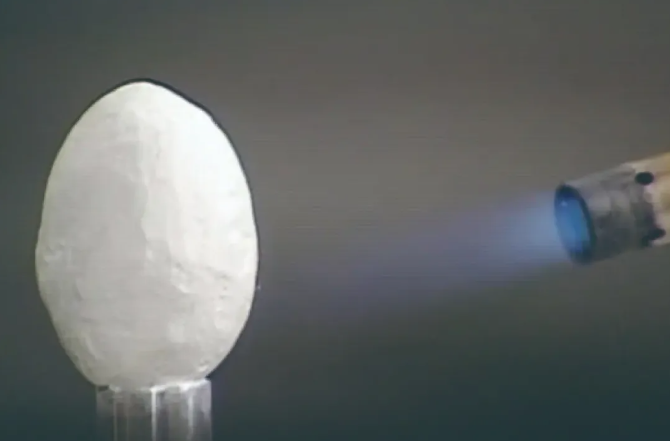
Ward was shocked, so he wondered if there could be a substance that could withstand high temperatures without releasing toxic smoke or gas. He began his own attempt. Obviously, this is not easy. He consulted many chemists and read many books. Due to his early involvement in coloring, he also incorporated his experience in hairdressing into it. He devoted himself to his’ research ‘without sleep or food, almost exhausting his energy. Thus, a miracle was born, and he ultimately invented a miraculous formula to create the ‘Star Stone’. The debut of “Star Stone” and the appearance of “Starlight” quickly aroused the interest of the media. In March 1990, Ward was invited by the BBC to showcase the practical application of “Starstone” on a program called “Tomorrow’s World” – this was also the debut of “Starstone”. The program team first coated the egg with this material and then placed it under an oxyacetylene spray lamp at 1200 ℃.
This lasted for 5 minutes, and as a result, when people took the egg out of the material coating, they found that not only did the eggshell not burn, but the yolk inside was still raw, only 35 ℃ (close to human body temperature) – the flame did not cause any damage to the egg.



+ There are no comments
Add yours